Lipid class

Triacylglycerol

Description
placeholder: Triacylglycerols, also known as triglycerides, are a class of neutral lipids composed of a glycerol backbone esterified with three fatty acid chains. The glycerol molecule, a three-carbon sugar, serves as the backbone, while the fatty acid chains, typically ranging from 16 to 24 carbons in length, are attached to the glycerol through ester linkages. The function of triacylglycerols is primarily energy storage, as they are the main component of adipose tissue, where they are stored in lipid droplets. Upon lipolysis, triacylglycerols are broken down into fatty acids and glycerol, which can then be utilized by the body as energy sources or building blocks for other lipids. Additionally, triacylglycerols play a role in the absorption and transport of dietary fats, as they are the primary form in which fats are absorbed from the gut and transported through the bloodstream.
Example 2D structure
An example of the Triacylglycerol (46:6) species (C49H82O6).
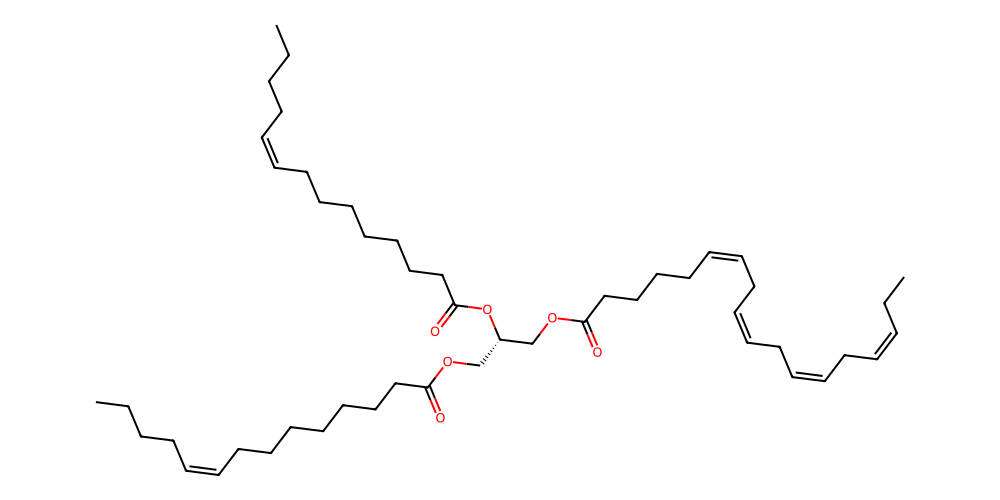
Image of the 2D molecular structure of an example member of the Triacylglycerol lipid class.
Triacylglycerol class lipid.
Roll over the image for an enlargement.

Triacylglycerol lipid species
Sorted by: molecular weight
Molecular formula Lipid species Molecular weight (g/mol) "Isoform specificity"
CD1a CD1b CD1c CD1d
C49H82O6 Triacylglycerol (46:6) 784.64
C55H102O6 Triacylglycerol (52:2) 859.77
C57H86O6 Triacylglycerol (54:12) 884.68
C57H88O6 Triacylglycerol (54:11) 886.69
C59H90O6 Triacylglycerol (56:12) 912.71
placeholder: Only lipid species which could be unambigously determined experimentally are shown.


DEBUG INFO