Lipid class

Lyso-phosphatidylethanolamine

Description
placeholder: The lyso-phosphatidylethanolamine (LPE) class of lipids is a subset of glycerophospholipids characterized by a single fatty acid chain esterified to the glycerol backbone, with a phosphoethanolamine headgroup. LPEs are formed through the enzymatic cleavage of phosphatidylethanolamine (PE) by phospholipase A2, resulting in the removal of a fatty acid chain. This structural modification enables LPEs to participate in various cellular processes, including membrane trafficking, cell signaling, and immune responses. Notably, LPEs have been implicated in the regulation of immune cell function, with studies suggesting that they can modulate the activity of immune cells, such as macrophages and T cells, and influence the production of pro-inflammatory cytokines. Furthermore, LPEs have been identified as ligands for certain G protein-coupled receptors, including GPR55, which is expressed on immune cells and plays a role in regulating immune responses. Overall, the unique structure and function of LPEs enable them to play a critical role in modulating immune cell function and responses.
Example 2D structure
An example of the Lyso-phosphatidylethanolamine (20:4) species (C25H44NO7P).
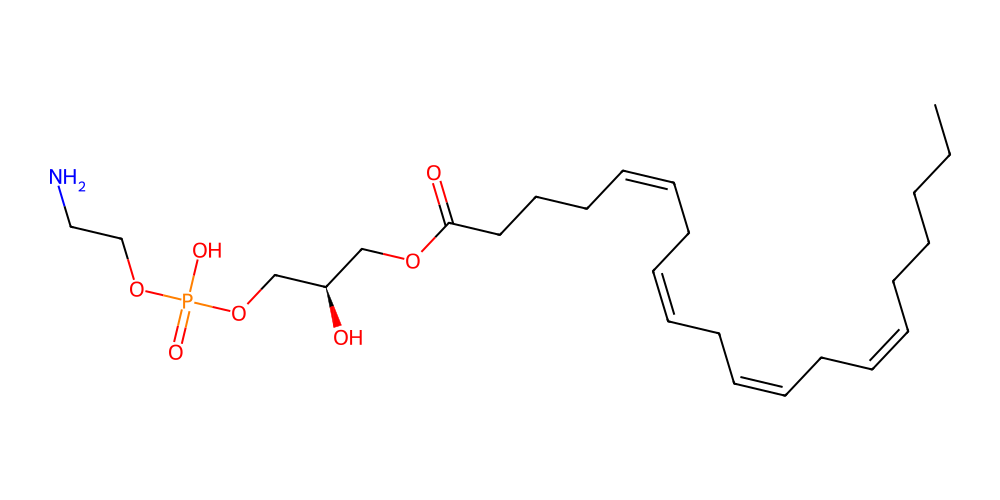
Image of the 2D molecular structure of an example member of the Lyso-phosphatidylethanolamine lipid class.
Lyso-phosphatidylethanolamine class lipid.
Roll over the image for an enlargement.

Lyso-phosphatidylethanolamine lipid species
Sorted by: molecular weight
Molecular formula Lipid species Molecular weight (g/mol) "Isoform specificity"
CD1a CD1b CD1c CD1d
C25H44NO7P Lyso-phosphatidylethanolamine (20:4) 502.29
C27H56NO7P Lyso-phosphatidylethanolamine (22:0) 560.37
C32H64NO7P Lyso-phosphatidylcholine (24:1) 606.45
placeholder: Only lipid species which could be unambigously determined experimentally are shown.


DEBUG INFO