Lipid class

Ceramide

Description
placeholder: Ceramides are a class of lipids that play a crucial role in various cellular processes, including cell signaling, apoptosis, and membrane structure. Structurally, ceramides consist of a sphingosine backbone linked to a fatty acid chain through an amide bond. This unique structure allows ceramides to interact with other lipids and proteins, influencing membrane fluidity and organization. Functionally, ceramides have been implicated in regulating cell growth, differentiation, and survival, as well as modulating the activity of various signaling pathways. For example, ceramides have been shown to activate protein phosphatases, leading to the dephosphorylation and inactivation of pro-survival kinases. Additionally, ceramides can also induce the formation of membrane platforms, facilitating the clustering and activation of receptors and signaling molecules. Overall, the structural and functional properties of ceramides enable them to act as key regulators of cellular homeostasis and response to environmental cues.
Example 2D structure
An example of the Ceramide (40:0) species (C40H81NO3).
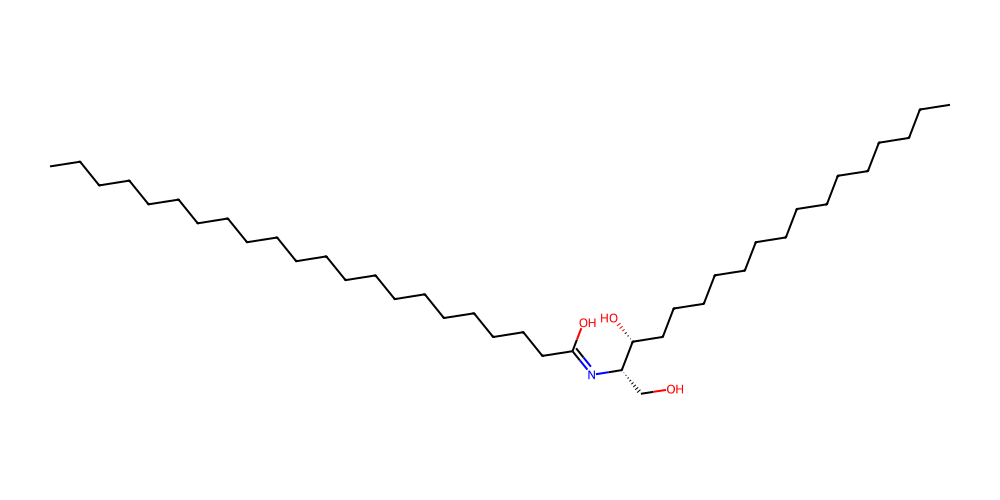
Image of the 2D molecular structure of an example member of the Ceramide lipid class.
Ceramide class lipid.
Roll over the image for an enlargement.

Ceramide lipid species
Sorted by: molecular weight
Molecular formula Lipid species Molecular weight (g/mol) "Isoform specificity"
CD1a CD1b CD1c CD1d
C40H81NO3 Ceramide (40:0) 646.61
C42H81NO3 Ceramide (42:2) 648.63
placeholder: Only lipid species which could be unambigously determined experimentally are shown.


DEBUG INFO